What Is an AI Voice Agent? A Plain-Language Explanation
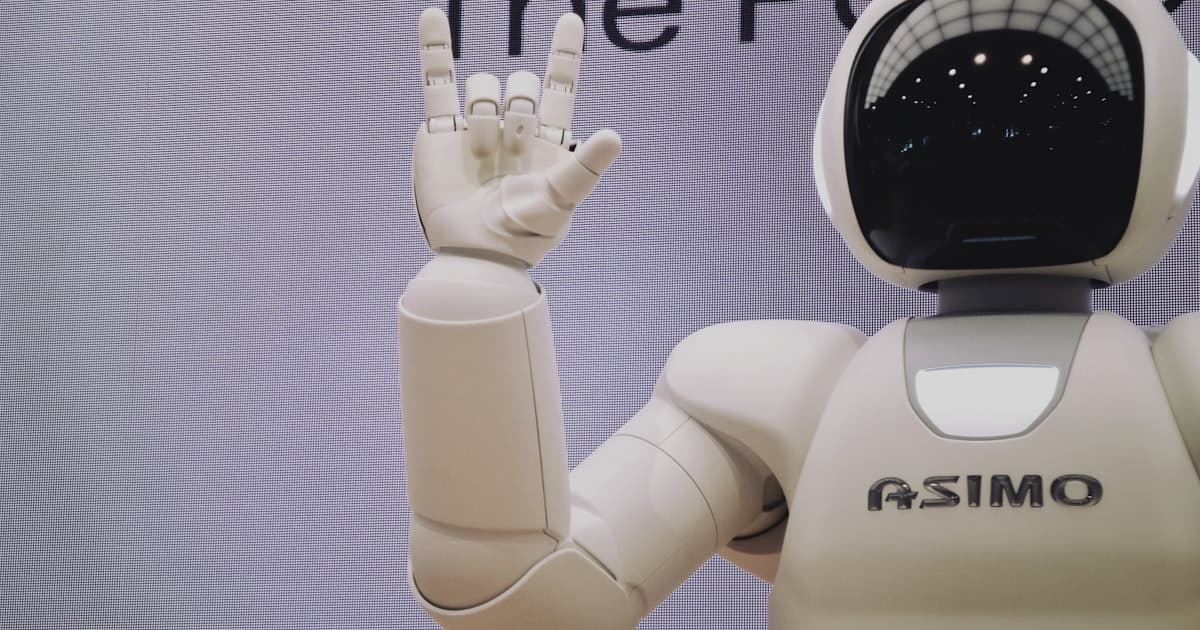
If you're hearing about AI voice agents for the first time, confusion is understandable. The term sounds like something between a robot and the voice assistant on your phone. In reality, it's different from both — and for businesses that deal with customers by phone, it may be the most important technology decision of the year.
What an AI Voice Agent Is NOT
Let's start with what it isn't, because this is where most people get confused.
Not an IVR (Interactive Voice Response) IVR is the old decision-tree system: "Press 1 for opening hours. Press 2 to reach sales." Rigid, frustrating, incapable of free conversation.
Not a chatbot A chatbot works in text — on a website or in an app. It doesn't hear, doesn't speak, doesn't conduct phone calls.
Not a speech synthesiser A speech synthesiser reads a pre-written script. It doesn't understand questions, can't react to a change of topic, and can't ask follow-up questions.
What an AI Voice Agent Actually IS
An AI voice agent is a system that:
- Listens — recognises speech and understands its meaning (not just keywords, but context)
- Thinks — based on the conversation, decides how to respond or what to do
- Speaks — responds in a natural, human-like voice
- Acts — executes tasks: books an appointment, saves a lead to the CRM, sends an SMS
A conversation with an AI voice agent feels like talking to a person — except the system is available 24/7, never takes holidays, and handles dozens of calls simultaneously.
How It Works Technically
Without going too deep into the technology, there are three layers:
1. Speech Recognition (Speech-to-Text) The caller's voice is converted to text in real time — handling accents, dialects, and different speaking speeds.
2. Language Model (LLM) The text goes to a language model (similar to the ones behind ChatGPT), which understands the caller's intent and generates an appropriate response. This is where the "thinking" happens.
3. Voice Synthesis (Text-to-Speech) The response is instantly converted back to speech — a natural voice that sounds like a person, not a 1990s robot.
The entire cycle takes less than 1 second. The pause is imperceptible to the caller.
What Do Businesses Use AI Voice Agents For?
Handling inbound calls:
- Booking appointments and reservations
- Answering FAQs (prices, location, opening hours)
- Routing to the right person or department
- Collecting information from the caller
Lead qualification:
- Initial conversation with potential customers
- Asking qualifying questions (budget, need, timeline)
- Assessing lead "temperature" before it reaches a salesperson
Outbound campaigns:
- Appointment confirmations and reminders
- Re-engaging inactive customers
- Follow-up after a submitted proposal
How Is It Different from a Website Chatbot?
| Feature | Chatbot (website) | AI Voice Agent (phone) |
|---|---|---|
| Channel | Text | Voice |
| Availability | When customer visits the site | When customer calls |
| Naturalness | Typing = effort | Speaking = natural instinct |
| Conversion | Lower | Higher (conversation builds trust) |
| Best use | Support, FAQ | Sales, bookings, qualification |
Phone remains the preferred contact channel for decisions that need to be made quickly. That's why a voice bot has a greater impact on sales than a chatbot.
Does the Customer Know They're Talking to AI?
Most business owners ask this before deploying.
The answer: it depends on configuration. Wavox doesn't pretend to be human by default, but it also doesn't open with "I'm a bot." It introduces itself as "reception at Company X" — which is accurate.
If a customer asks directly, "Are you a human?", the bot can answer honestly or route the conversation to a real person — depending on settings.
In practice, when the bot works well, customers rarely ask. They're focused on the goal of the call — and they achieve it.
Which Businesses Benefit Most?
An AI voice agent makes sense wherever:
- A business receives many repetitive phone calls
- The cost of phone handling is high (full-time staff)
- Calls arrive outside business hours
- Response time affects conversion (real estate, healthcare, B2B)
It doesn't make sense when every conversation is unique and requires deep expertise — that's still a job for a human.
Summary
An AI voice agent is a system that holds real phone conversations, understands context, and executes tasks — without human involvement. It's not an IVR decision tree or a website chatbot.
For businesses losing calls outside business hours or with overloaded reception, it's the most direct way to recapture revenue currently going to competitors.